
Weeks 1–2
Pain
Find the deficit, start safe.
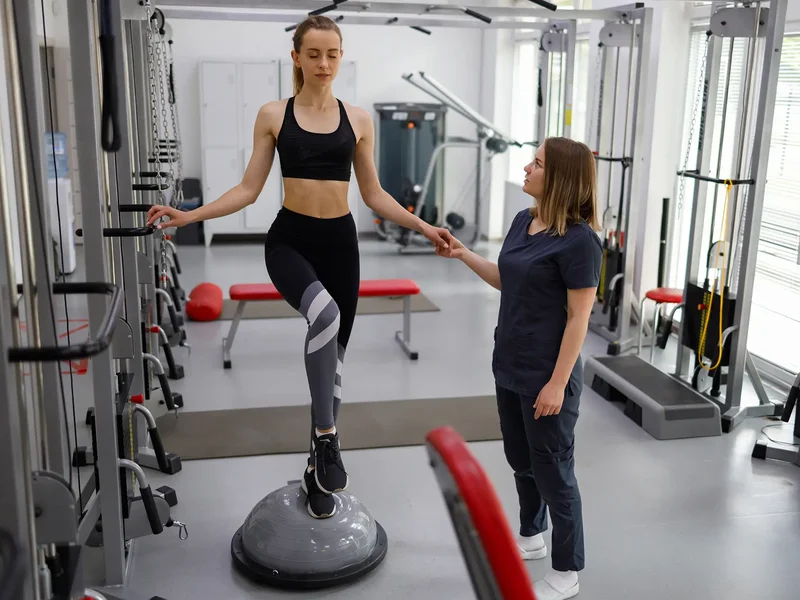
We pinpoint the specific balance deficit behind your unsteadiness and start safe, confidence-building movement your very first visit.
No referral needed. A real person calls you back, usually within two business hours.
What We Treat
Grabbing the railing on stairs you used to take without thinking. A near-fall that shook your confidence. Steadier steps start with a cause-first evaluation, not a guess.
Sound Familiar?
Two or more? Keep reading.
Why It Happens
Balance isn’t one thing. It’s your strength, your vision, the inner ear, and your brain coordinating all three, working together every time you stand up or take a step. Any one of those systems can weaken with age, with inactivity, or after an illness, surgery, or inner-ear event. When one link gets weak, the whole chain feels unsteady.
That’s why a cause-first evaluation matters. It pinpoints exactly which system is the weak link for you, whether it’s strength, mobility, or how your body processes balance signals. Once we know the real cause, your plan targets it directly. That beats generic “be careful” advice every time.
The Honest Truth
Nobody regrets starting too early. Every week, someone in our clinic says they regret waiting.
How We Fix It
Every plan has an endpoint. Here’s what the four phases look like for balance and gait.
Weeks 1–2
Pain
We pinpoint the specific balance deficit behind your unsteadiness and start safe, confidence-building movement your very first visit.
Weeks 2–6
Prime
Targeted strength and mobility work restores the areas that have been holding your balance back.
Weeks 6–10
Perform
We challenge your balance the way real life does: stairs, uneven ground, and turning quickly, all under supervision.
Weeks 10+
Prevent
A long-term strength and balance routine keeps you steady: that’s the endpoint, not just another appointment.
He worked me into his schedule and was prompt with his appointment times. He was very thorough is his diagnosis and not afraid to very strongly encourage/advise certain avenues of therapy. He was also very helpful in providing exercises to do/not do, with simple explanations of why and how I highly recommend this practice!
Shared by Tammy K.
Needing thorough answers about what was safe to do or not do
Clear exercises and explanations she could trust
Questions, Answered
You’ve been careful, and that’s kept you safe. Now let’s get your confidence back too. Age plays a role, but it’s rarely the whole story. Strength, balance, and coordination respond to training at any age, whether you’re 55 or 85. We start with an evaluation to find your specific deficits, then build a plan that targets them directly.
Yes. Every session starts at a level that’s safe for where you are right now, with support the whole time. We progress carefully, one step at a time, based on what your body can handle that day. You’ll never be pushed past what feels safe.
Most patients feel meaningful change within a handful of visits. A full plan for balance and gait runs through all four phases, Pain, Prime, Perform, and Prevent, with the total timeline depending on your starting point. Either way, you get a plan with an endpoint: you’ll always know which phase you’re in and what’s left, not an open-ended string of appointments.
Book Your Visit
Request a time and a real person calls you back, usually within two business hours. No phone tree. No ‘someone will reach out.’ Just a plan.
5.0 · 213 Google reviews
Typical response: under 2 business hours
Step 1 of 5
That’s the hard part done. We’ll call during business hours to lock in your time. Most people are on the schedule same week.
Visit Us