
Weeks 1–2
Pain
Calm the swelling down.
Hands-on techniques calm swelling and pain around the knee, whether you’re still headed to surgery or just came from it.
What We Treat
Whether surgery is coming up or already done, rehab focused on getting your new knee to bend, trust, and carry you like it should.
Sound Familiar?
Two or more? Keep reading.
Why It Happens
How much strength and motion you have going into surgery affects how fast you recover after it. That’s the whole idea behind “prehab.” A stronger, more mobile knee on the way in tends to bounce back faster on the way out.
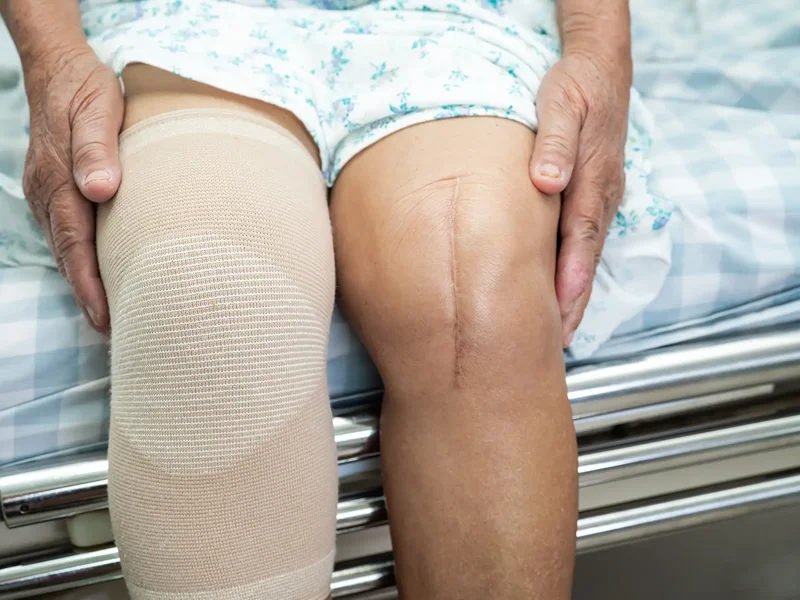
And after surgery, it’s rarely the implant holding you back. It’s the swelling, the scar tissue, and the muscle inhibition around the new joint, the body’s normal response to a major repair. A cause-first evaluation, whether you’re preparing for surgery or recovering from it, targets exactly what’s holding your knee back right now.
The Honest Truth
Nobody regrets starting too early. Every week, someone in our clinic says they regret waiting.
How We Fix It
Every plan has an endpoint. These four phases work whether you’re prepping for surgery or recovering from it.
Weeks 1–2
Pain
Hands-on techniques calm swelling and pain around the knee, whether you’re still headed to surgery or just came from it.
Weeks 2–6
Prime
Targeted mobility work restores the knee bend and straightening you need for stairs, chairs, and getting in and out of the car.
Weeks 6–10
Perform
Progressive quad and hip strengthening rebuilds what surgery, or the pain before it, took out of your leg.
Weeks 10+
Prevent
Walking, stairs, and the activities you actually miss get tested under real load before you’re cleared to go all-in: that’s the endpoint, not just another appointment.
When it was decided I was going to have a knee replacement, I went to Brad for prehab. Through several therapy techniques he was able to decrease the pain and strengthen the knee so that I was able to delay the surgery for about a year.
Shared by Cindy H. · Knee replacement prehab
Before: a knee replacement decision already made, and pain that needed pre-surgical support
After: strengthened and decreased pain enough to delay surgery for about a year
Questions, Answered
It can, for some people. Strengthening the knee and reducing pain has helped patients delay surgery, in one case by about a year, but it isn’t guaranteed to avoid surgery entirely. That decision is always between you and your surgeon. What we can do is give your knee the best shot at whatever comes next.
Generally as soon as your surgeon clears you, often within days. Starting early on swelling and motion tends to pay off for the rest of your recovery. We’ll coordinate with your surgeon’s protocol so you start at the right time for your specific case.
Typically several weeks through all four phases post-op: Pain, Prime, Perform, and Prevent, depending on your surgeon’s protocol and how your knee responds. Either way, you get a plan with an endpoint: you’ll always know which phase you’re in and what’s left, not an open-ended string of appointments.
Book Your Visit
Request a time and a real person calls you back, usually within two business hours. No phone tree. No ‘someone will reach out.’ Just a plan.
5.0 · 213 Google reviews
Typical response: under 2 business hours
Step 1 of 5
That’s the hard part done. We’ll call during business hours to lock in your time. Most people are on the schedule same week.
Visit Us