
Weeks 1–2
Pain
Calm the flare-up down.
Hands-on techniques calm the current flare-up and take the edge off the pain, starting your very first visit.
What We Treat
Mornings spent working the stiffness out of your hands and knees. Jars you hand off to someone else. Care that keeps your joints moving, starting with a cause-first evaluation.
Sound Familiar?
Two or more? Keep reading.
Why It Happens
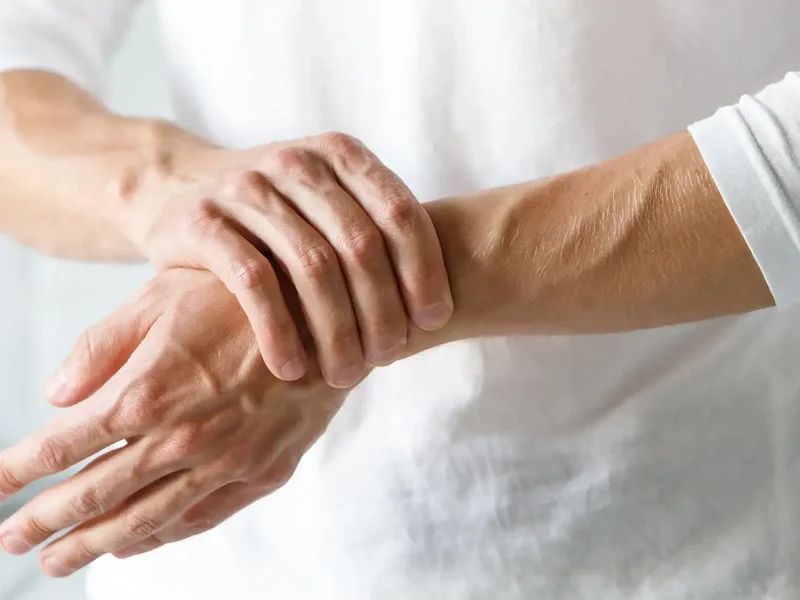
Cartilage wear changes your joint’s mechanics. That part is out of anyone’s control. But how much it actually hurts, how much it holds you back, that’s driven by something else entirely: the muscles around the joint, how stiff it’s gotten, the movement patterns you’ve built up to protect it. All things physical therapy can influence. None of them reverse the arthritis itself, but they change how it feels.
A cause-first evaluation sorts out which of those is actually driving your symptoms today. Not a generic arthritis pamphlet, not a one-size plan. Yours specifically: which muscles have weakened, where you’ve lost motion, which habits are loading the joint the wrong way. Find that, and the plan gets obvious.
The Honest Truth
Nobody regrets starting too early. Every week, someone in our clinic says they regret waiting.
How We Fix It
Every plan has an endpoint. Here’s what the four phases look like for arthritis.
Weeks 1–2
Pain
Hands-on techniques calm the current flare-up and take the edge off the pain, starting your very first visit.
Weeks 2–6
Prime
Targeted mobility work restores motion in the joint and cuts down the stiffness that’s built up around it.
Weeks 6–10
Perform
Progressive strengthening rebuilds the muscle support surrounding the joint, taking pressure off it with every session.
Weeks 10+
Prevent
A maintenance plan keeps you moving and manages future flare-ups before they slow you down. Arthritis doesn’t stop, so this phase is ongoing, with periodic check-ins to keep you ahead of it.
Fantastic, one on one care that has been a game changer to my quality of life. Treatments are not only effective but the personal attention and care given to all clients is unique in this quantity over quality world. Highly recommend!
Shared by April F.
Before: quality of life limited by pain and stiffness
After: a game changer, thanks to ongoing one-on-one care
Questions, Answered
Physical therapy doesn’t reverse arthritis, and we won’t tell you it does. What it does is manage the symptoms: less pain, less stiffness, more strength around the joint, and it can slow how much function you lose over time. Most people who stick with a plan feel meaningfully better and move better, even though the joint changes underneath are still there.
Yes, in most cases movement is exactly what an arthritic joint needs. Total rest lets the muscles around the joint weaken, which makes the joint work harder and hurt more. The key is dosing the right movement for your specific joint, which is exactly what a Doctor of PT sorts out at your evaluation, then progresses safely as you improve.
Your initial plan runs through all four phases, Pain, Prime, Perform, and Prevent, and it has an endpoint: you’ll always know which phase you’re in and what’s left. Because arthritis is an ongoing condition, some people choose periodic tune-up visits after that to stay ahead of future flare-ups, but that’s optional, not required.
Book Your Visit
Request a time and a real person calls you back, usually within two business hours. No phone tree. No ‘someone will reach out.’ Just a plan.
5.0 · 213 Google reviews
Typical response: under 2 business hours
Step 1 of 5
That’s the hard part done. We’ll call during business hours to lock in your time. Most people are on the schedule same week.
Visit Us